
Want to know what your property is worth?
Want to know what your property is worth?
SEARCHING FOR MORE SPACE THIS SUMMER?
Here's why you should sell your property this summer...
1. IT'S A PERFECT TIME TO SHOWCASE YOUR PROPERTY
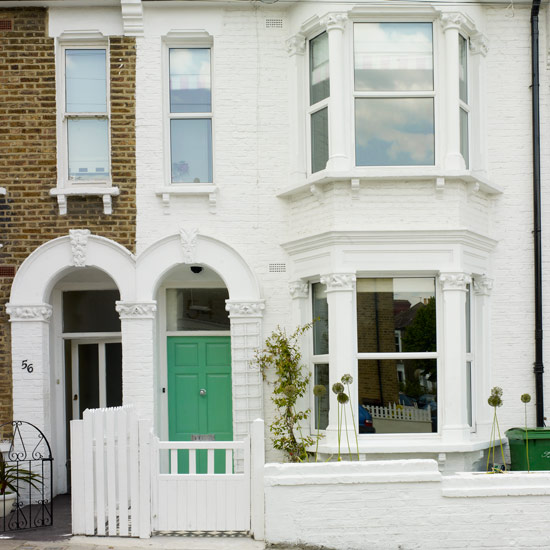
If you are looking to showcase your most valuable asset, summer gives you the chance to ‘wow’ potential buyers and sell them the dream they’ve been looking for. With the garden in full bloom and sunlight streaming through the windows (when the UK decides!) buyers will love looking around your home.
2. SERIOUS BUYERS & SELLERS
Sometimes there are less properties on the market in Summer, however the buyers and sellers looking tend to be the most serious ones!
3. GET SETTLED BEFORE THE NEW TERM
Buyers with children will be keen to have them settled in before school term starts. What’s more, with glorious weather, moving home can actually be a great experience.
More than a quarter of UK homeowners and renters have claimed that their property priorities have changed since the COVID-19 outbreak.
Previously highly-sought after and high-value property features have dropped down the priority list for home buyers and tenants, as they now seek different factors when looking for a property that meets their needs and lifestyles.
Easy commutes to work, proximity to local shops and restaurants, and local public transport links are no longer as desirable as they once were.
Instead, we have noticed a significant increase in those searching for more space, whereby those searching are willing to compromise on location or local amenities in return for larger bedrooms and a 'work from home' zone.
Having access to a private garden or nearby green space has also become one of the top preferences for homebuyers and renters, especially in light of reduced travel options this summer.
If you need more space, call V&H Homes on 01372 221 678 to see how we can help.
This article was extracted from Rightmove for informational purposes
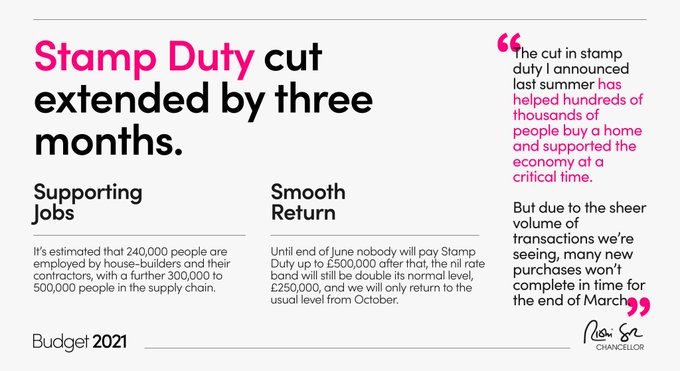
The government has announced that the temporary stamp duty holiday in England and Northern Ireland has been extended until the end of June.
The news will hopefully come as a relief to those buyers and sellers who have been desperately trying to get their sale completed in time to meet the previous deadline of 31st March.
What is the temporary stamp duty holiday?
The temporary stamp duty holiday, first announced by the government on 8th July last year, means that if you are buying a home up to the value of £500,000 you will not pay any stamp duty.
The extension means you now have until 30th June to complete on the purchase to make the stamp duty saving.
Then, to smooth the transition back to normal, the nil rate band will be £250,000, double its standard level, until the end of September.
It will return to the usual threshold of £125,000 on 1st October.
There hasn’t been any further update from Scotland on any extension to the Land & Buildings Transaction Tax (LBTT) holiday, which is currently due to end on 31st March 2021.
In Wales, temporary Land Transaction Tax reductions are also set to end on 31st March, but we’ll let you know if this changes.
Are there delays in the home-moving process right now?
When the announcement was first made in July we recorded our busiest ever day on Rightmove, as people rushed to see if they could move home and make use of the savings, leading to a huge increase in the usual number of sales that would be going through the legal process.
We estimate that there are currently 628,000 sales going through, and this massive number, coupled with the challenges of conveyancers, solicitors and councils working from home, has led to delays in the home-buying process.
Our latest data shows that it is taking an average of 65 days from the time a seller has a property listed by an agent on Rightmove until they get an offer accepted, and a further 126 days to get through to legal completion, which is almost seven months.
But remember these are averages, and other factors such as if you are a cash buyer or if council searches in your area take longer will affected how long it takes.
What do the experts say?
Our resident property data expert Tim Bannister explained that the stamp duty holiday extension should give tens of thousands of home-movers the chance to complete before the new deadline.
He said: “This three-month extension will come as a huge relief for those people who have been going through the sales process since last year and were always expecting to make use of the stamp duty savings.
“Our recent data shows one in five sales that were agreed in the same month the stamp duty holiday was first announced in July last year still haven’t completed, so this additional time will make a big difference to help those stuck in the logjam complete their purchase in time before the new end of June deadline.
“Buyers who have recently agreed a sale now have a race on their hands to see if they can also make use of the stamp duty savings, but many with purchases over £250,000 will find that time is too tight to complete before the end of June and so shouldn’t be factoring this into their purchase.
“It’s worth remembering that the average savings vary massively around England, and first-time buyers will still be exempt if they’re buying for £300,000 or less. There are also many other reasons people are choosing to move, evidenced by the strong buyer demand Rightmove has already seen in the first two months of the year.”
The following information is extracted from Rightmove
A mortgage guarantee scheme aimed at helping first-time buyers and existing homeowners is set to be unveiled by the government in this week’s Spring Budget announcement.
Chancellor Rishi Sunak is expected to reveal the specifics of the scheme on Wednesday (3rd March). In the meantime, we can share what we know so far.
What do we know about the mortgage guarantee scheme?
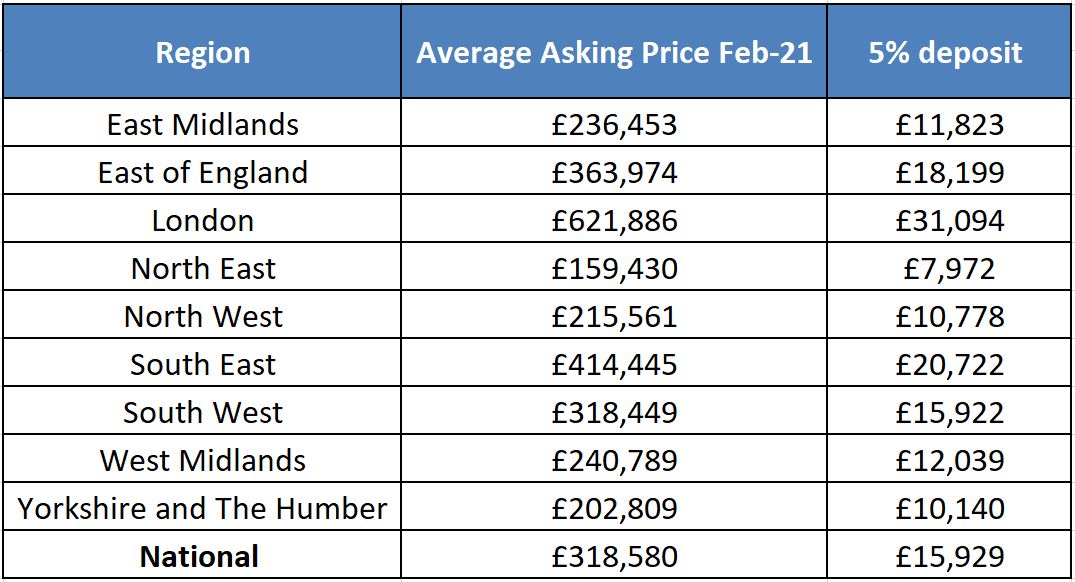
Under the new scheme, which is expected to launch in April, we anticipate that buyers will be able to purchase homes worth up to £600,000 with a deposit of just 5%.
And this means that the majority of buyers should be eligible for the scheme, as our data analysts have found that 86% of properties currently listed for sale on our site have an asking price of £600,000 or less.
However, please note that with an average asking price of £621,886, many properties across Greater London will be priced above the scheme’s proposed threshold of £600,000 (see below).
What impact could the mortgage guarantee scheme have regionally?
What are some of the key statistics?
- The national average asking price for all properties is currently £318,580, which is 3.0% higher than February 2020
- The national average asking price of a first-time buyer property is £200,692, which is 3.6% higher than February 2020
- Since the 2013 Help to Buy mortgage guarantee scheme was first launched, national asking prices have increased by 29% from £246,748 in October 2013 to £318,580 in February 2021
- Since the 2013 Help to Buy mortgage guarantee scheme was first launched, national asking prices for first-time buyer properties have increased by 36% from £147,464 in October 2013 to £200,692 in February 2021

The rent or buy debate is a pretty controversial topic with no simple answer, but we want to put paid to the ever-present myth that buying is always better than renting.
But renting doesn’t mean you are throwing away money in the same way that buying a home isn’t always the right decision at certain times in your life. So we’ve come up with a list of 12 reasons why renting might just be the better option for you.

1.No maintenance costs or repair bills
When renting a property, your landlord is usually responsible for all maintenance and repair costs, ensuring you don’t have the financial responsibility to get these things fixed.

2. No large down-payment
Renters have the better financial deal upon signing as a house with a mortgage requires a sizable down payment compared to the usual deposit for renting a property.

3. There’s a fixed rent amount
Rent amounts are certain for the span of the lease agreement – so long as it’s a fixed-term contract – making it easier to budget your money so you know exactly how much you’re required to pay.

4. You can keep things flexible!
When you buy a house you are tied down to living in that location for at least a few years usually, whereas if you’re renting a property you have the flexibility to move around if something changes in your life or outlook.

5. You have the options for housemates
Housemates are many things – from being someone to split the bills with to potentially becoming some of the best friendships you may ever have.

6. Invest money on your own terms
Choosing not to buy a home – at least for the moment – opens up other possibilities for saving and investing so you can choose exactly where your hard-earned money is going.

7. Generally lower utility costs
Rental properties typically have a more compact floor plan, therefore renters can often expect to face lower utility costs – another money saver.

8. Enjoy being mortgage-free
By renting you can put away as much (or more) savings as a homeowner, but without the debt that comes along with owning a property.

9. Urban living at a cheaper price
Depending on where you want to live, trendy areas, such as major cities, and beach communities, are typically more renter friendly.

10. Decreasing property value
Property values go up and down over the years depending on the area you live, and, while this may affect homeowners in a big way, it affects renters substantially less so, if at all.

11. Excuse yourself from costly updates
As a renter, there is freedom in knowing you couldn’t remodel your home even if you wanted to, so this a way of saving money.

12. Insurance is cheaper
Renter’s insurance is significantly cheaper than the insurance home owners have to pay.

So there you have it. It’s likely you already have your own opinion about whether renting or buying is right for you now – or in the future – but hopefully this article has given you a few reasons to show that renting can be seriously advantageous for many of us.
If you are considering selling or letting your property in Ashtead, Leatherhead, Fetcham, Epsom, Bookham or the surrounding areas, call V&H Homes on 01372 221 678

We’re not used to spending so much time in our homes, but whilst we are, it’s important that we make the most of it.
It gives you a chance to play more with the kids and also see to those bits of DIY that you have either not been able to get round to doing or purposely avoided.
There’s no getting out of them now and you shouldn’t want to as they will benefit your home life.
Show your home some love with these three simple DIY jobs and it will love you back:
Add a lick of paint to those rooms in need of it!
One of the quickest and most effective ways of reviving a room is to patch up any paintwork that’s looking untidy. Hopefully, you might have a tin of the original paint lying about somewhere and a few paintbrushes stashed away.
For a more drastic transformation, change a colour scheme completely by fully repainting a room in a fashionable shade.
As it’s now spring, a sage or olive green colour seems fitting, or try a cheery yellow.
To get a combination of colours, paint your skirting boards and doors in different finishes.
Do a bit of fixing and recycling
It’s unheard of for a home to have nothing that needs fixing – there’s always something in need of repair.
Certain pulls, handles and knobs on your cupboards could be loose and need tightening or a fence panel in the garden wants mending. You can sort this yourself rather than pay someone to come and remedy them for you once lockdown is over.
If you’re a hoarder, now would also be an apt time to repurpose any rarely used items you have in the house.
Get your garden organised for spring / summer
Being stuck indoors for so many hours of the day can be tough, so use your garden at every opportunity to breathe in some of that fresh air.
In ordinary circumstances, we’d encourage you to bring the outdoors indoors, but current circumstances demand a reversal – taking the indoors, outdoors.
So get that garden furniture and those bean bags out so that you can relax in the sunshine, whilst the kids take to their swings and slides.
Give the garden a good tidy first to maximise the space, donning your gardening gloves for all that mowing, weeding and preening you need to do.
If you are considering selling or letting your property in Ashtead, Leatherhead, Fetcham, Epsom, Bookham or the surrounding areas, call V&H Homes on 01372 221 678
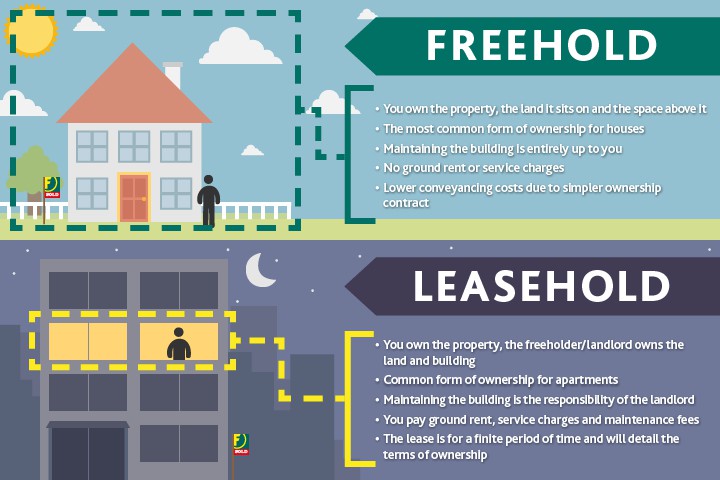
Under the government proposal to reform leasehold laws, leaseholders will be able to extend their lease by a maximum term of 990 years at zero ground rent. And with new rules possibly arriving within two years, investors may be setting their sights on properties with short leases buoyed by the prospect of no longer having to pay ground rent to a freeholder and much longer lease term allowances.
What are the proposed changes to the leasehold system and how does it affect current leaseholders and future homeowners buying a leasehold property?
Historically, properties with short leases have been eschewed by investors and homebuyers due to the complexity and costs involved when extending a lease. This is set to change.
Announced in early January 2021, in one of the biggest reforms to English property law for 40 years, the government is planning to introduce reforms to leasehold property to make it easier and cheaper for leaseholders to buy their homes or extend their lease at zero ground rent by a maximum of 990 years.
For some leaseholders, these changes could save them thousands, to tens of thousands of pounds.
Under current rules, leaseholders of flats can extend their lease at a zero ‘peppercorn’ ground rent, but usually only for 90 years.
Leaseholders can also face high charges to extend their lease. Leasehold house owners, which face slightly different rules, can also face barriers when they look to extend their leases.
Details of how changes will be implemented are yet to be clarified by the government. V&H Homes dedicated Sales team can provide advice on all matters relating to lease extensions and buying leasehold property in the UK.
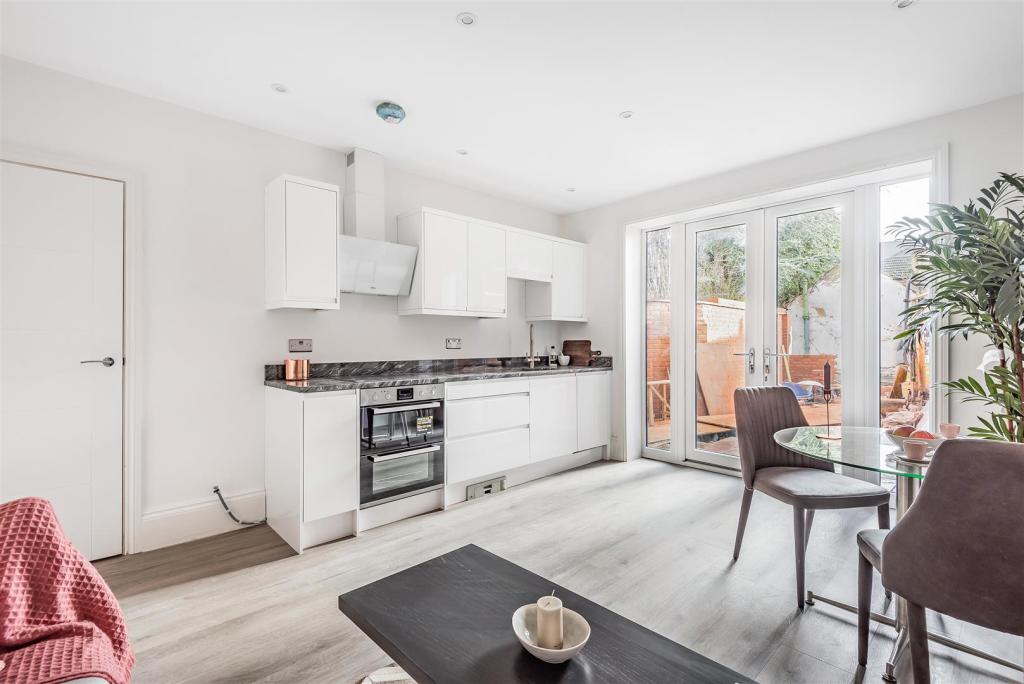
1 BEDROOM APARTMENT WITHIN A STONES THROW TO ASHTEAD STATION
Terms of lease
999 year lease
Managed in the first instance by Smarter Developments who are the freeholders
Ground rent £250pa
Service charge c£850pa TBC
Rental values
Approximate rental values are between £1,000pcm and £1200pcm
Key features
- Executive New Build Apartments
- Opposite Ashtead Common
- 280 Metres from Train Station
- Highly Energy Efficient Building
- Contemporary Kitchens with Breakfast Bars
- Patio Garden
- Ideal for Working From Home
- Underfloor Heating in Bathrooms
- Superb Investment or Home
- Prices from £320,000
If you are considering selling or letting your property in Ashtead, Leatherhead, Fetcham, Epsom, Bookham or the surrounding areas, call V&H Homes on 01372 221 678
The following information is taken from Rightmove...
"The property market has experienced a mini boom in 2020, and the big question many of you want answered is: will prices continue to rise in 2021?
Whilst we don’t have a crystal ball, we do have the biggest home-hunting audience in the UK, as well as unique insight into future demand for property.
So armed with all that data, we’ve produced a forecast of what we think will happen to property prices in 2021.
Our main prediction is that the recent surge in average asking prices will continue into next year, as the nation’s housing needs are likely to outweigh any economic uncertainty.
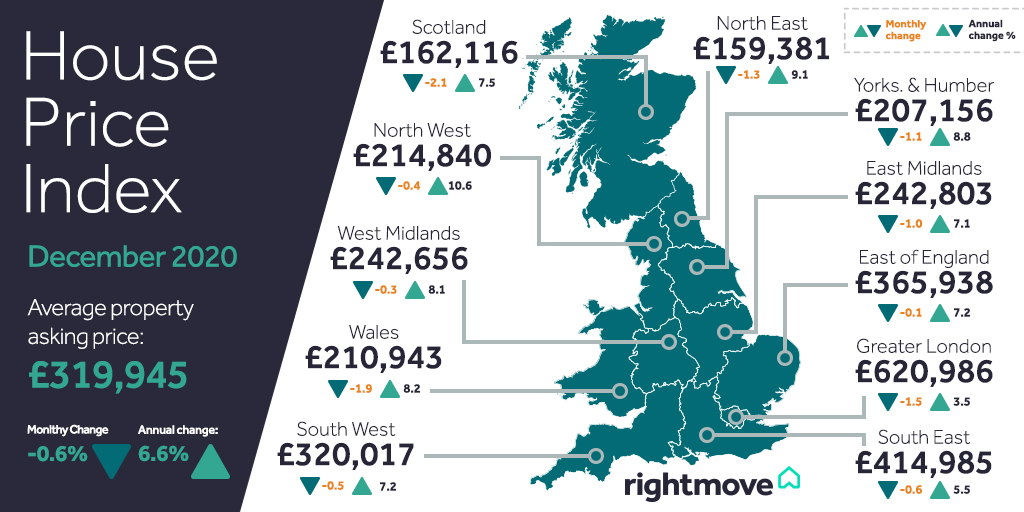
Specifically, we forecast a robust 4% national average house price growth in 2021. However, we think that the price rises will be at a slower pace than this year, which finished 6.6% up on 2019.
What can we expect from the property market in 2021?
It will be a busy start to 2021. The New Year is typically a time for resolutions for the year ahead, and many will see it as an opportunity to draw a line under 2020, which may well include a fresh start in a new home for those who have not already acted.
Many of you have already done so this year, and many more are continuing to do so despite the seasonally quieter run-up to the Christmas period and the declining chance of completing a purchase before the stamp duty deadline in March.
Despite the clock ticking, around 130,000 sales were agreed over the last month, up by a remarkable 44% on the same period in 2019.
However, there remains a processing logjam and some completions are already projected to be delayed until April next year, especially where there are search delays, legal issues or complex mortgage applications.
What will happen when the stamp duty holiday ends?
It will be a slower second quarter once the stamp duty holiday is over, though even with the average price in Britain up by 6.6% this year, cheap mortgage rates that are available for some leave scope for further modest price growth – despite the loss of the tax saving.
What do the experts say?
Rightmove's resident property data expert Tim Bannister explained that it may be quieter in the market in the spring.
He said: “2021 has a lot of variables, and so is not an easy one to call, but with Rightmove’s unique leading indicators of buyer and seller behaviour we are confident that the housing market will continue to outperform general expectations next year as it did this.
“Our 2021 forecast of a 4% price rise is more conservative than the unsustainable 6.6% national average seen this year. There’s likely to be a lull in quarter two unless the stamp duty holiday is extended, but for many buyers its removal will not be make or break, though may lead them to reduce their offers to a degree to compensate for the higher tax, and indeed many sellers may be prepared to help to mitigate their buyer’s financial loss.
“First-time buyers will remain largely exempt, so in most cases will be no worse off. The maximum savings of £2,450 in Wales or £2,100 in Scotland are considerably less decisive than the £15,000 available in England for a house costing £500,000 or more, which does however only apply to a small part of the market.”
If you are considering selling or letting your property in Ashtead, Leatherhead, Fetcham, Epsom, Bookham or the surrounding areas, call V&H Homes on 01372 221 678

Traditionally, spring and autumn are the most popular times to sell your house. But this year has been anything but ordinary and with the stamp duty deadline looming, many sellers have put their house on the market already.
If you are selling your home over the coming winter months, here are some tips to help make sure your property stands out.
- Make your home a cosy refuge from the cold. Put the heating on ahead of viewings and, if you have one, light the fire. Check all your light bulbs, make sure the lights are on throughout the house and consider placing lamps to brighten up any dark corners. For viewings in the late afternoons and evenings, ensure outside lights are on before anyone arrives.
- As ever, promote your home’s best features. With strong demand for home working spaces, showcase how your property fits the bill – whether it’s a separate office or a dedicated desk for home schooling in the playroom. By all means tidy up but don’t feel the need to tidy work away, as it will show off how the space can be used.
- Don’t forget the garden. Outside space is at the top of many buyers’ wish lists so ensure yours is presented in its best light, despite the gloomy winter weather. Make sure it looks cared for by raking up leaves, clearing guttering, mowing the lawn, trimming shrubs, clearing moss from paths and tidying plant pots, removing any weeds. Don’t forget to cut back plants growing around windows so they’re not blocking the light. Put away garden furniture unless it’s a dry, sunny day when you could get it out for viewings.
- As is the case with selling at any other time of the year, make sure your home is clean, decluttered and tidy, and finish off any odd jobs around the house that need doing. Tidy up paintwork and fix damp patches, superficial cracks or stains on ceilings or walls left by previous leaks. This sort of upkeep is typically inexpensive to sort out but can be off-putting on a viewing.
- First impressions count. The front door can get dusty and dirty at this time of year, especially if you live in a town. Keep it washed down and polish any brass door furniture. A collection of pots full of winter flowers by the front door is a welcoming touch and will brighten things up.
If you are considering selling or letting your property in Ashtead, Leatherhead, Fetcham, Epsom, Bookham or the surrounding areas, call V&H Homes on 01372 221 678

The government has announced that the new Help to Buy Equity Loan scheme in England, which is due to begin in April 2021, will be open to new applications from the 16th of December.
This may come as good news for first-time buyers struggling to save up for a deposit of more than 10%, at a time when mortgages with a loan-to-value higher than 85% are hard to find.
The new scheme, which is replacing the current one, is set to run for two years, until March 2023.
Here’s a quick overview of what it is, and who it’s for.
What is the Help to Buy Equity Loan scheme?
Back in 2013, as a way to help more people get on to the property ladder, the government launched a scheme which makes it possible for buyers to buy a home with as little as a 5% deposit.
Close to 300,000 new homes were bought using the scheme in the seven years since its launch, and as it comes to an end, the government has created a new, and similar, one to replace it.
If you’re eligible for the scheme, and can prove you have enough saved to cover a 5% deposit, the government will provide a low-interest loan of 20% of the house price (or up to 40%, if you’re in London), and the mortgage provider will lend the remaining balance.
The government loan is interest-free for the first five years. After that, a monthly interest fee of 1.75% will apply, and will increase each year in April in line with the Consumer Price Index (CPI), plus 2%.
Who’s eligible for it?
The new scheme is only available if you meet all of the following requirements:
- You’re a first-time buyer. You – and your partner, if you’re married or in a civil partnership – must not own, or have previously owned, any property or residential land in the UK or abroad.
- You are purchasing a newly built home. And you’ll have to make sure you’re buying the property off an approved developer who is registered with the scheme.
- The property must be your only property and your permanent residence.
- You can demonstrate you have a minimum deposit of 5% of the property’s purchase price, and that you have the means to keep up with the monthly mortgage and Equity Loan repayments.
Is there a limit to the price of the property I can buy using the scheme?
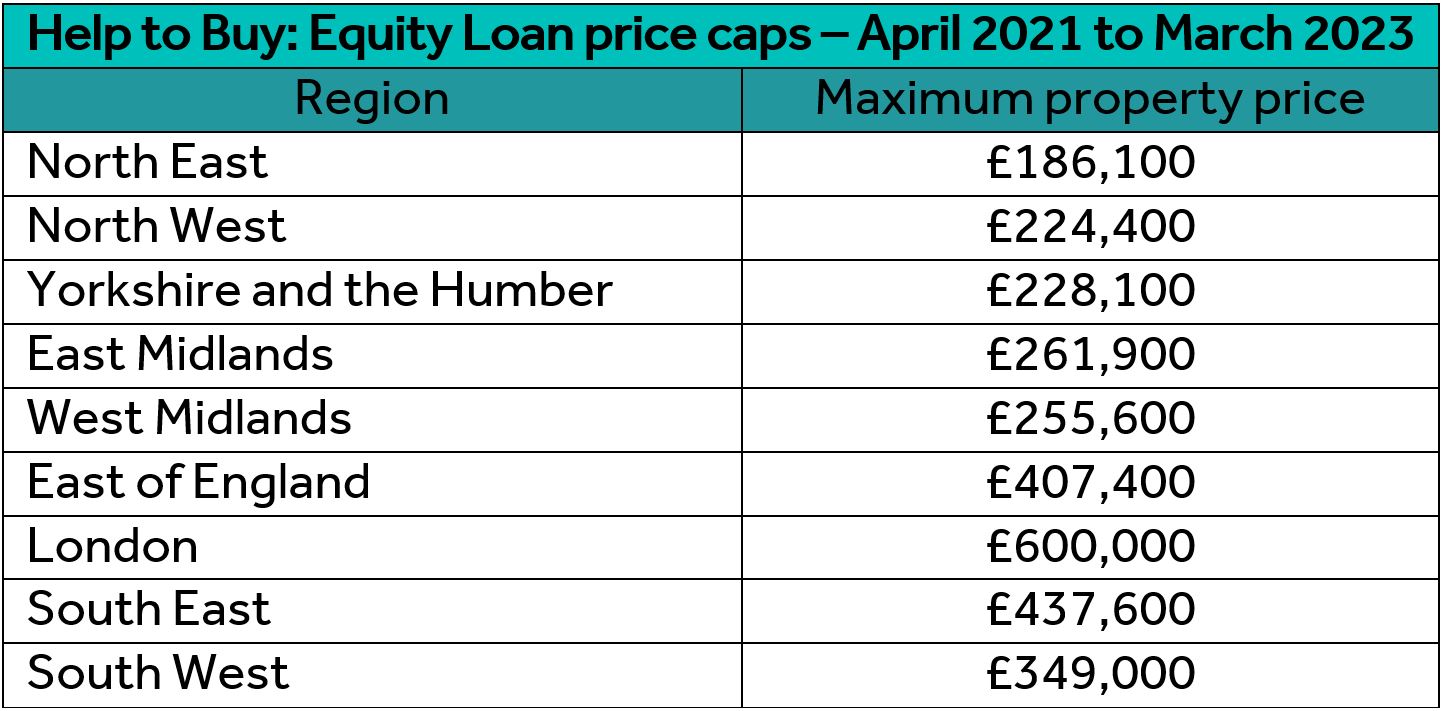
Yes, the government has introduced price caps for each region in England, so the maximum property price will depend on where you are buying.
There are the new regional price caps:
If you are considering selling or letting your property in Ashtead, Leatherhead, Fetcham, Epsom, Bookham or the surrounding areas, call V&H Homes on 01372 221 678
The asking prices of property coming on to Rightmove increased in our last two monthly reports, but this month they’ve seen a dip of around £1,500.
Is this something for sellers to worry about? We don’t think so, as there are a few reasons for the slight drop.
Firstly, the stamp duty holiday on homes up to £500,000 is due to end on 31st March, and so sellers putting their property up for sale now are perhaps pricing a bit more realistically so that they have a better chance of a quick sale.
Secondly, asking prices usually drop at this time of year, and this month’s drop is actually lower than we’ve seen over the past few years.
The good news if you’re a new seller is that buyer demand is staying strong despite the second national lockdown in England. We saw an initial, temporary dip after the new restrictions were first announced, but demand was still up by 28% on the same days last year during the three days between the announcement and the lockdown.
The first six days of lockdown saw demand jump back up to being 49% higher than this time last year, as the market is still open and agents can still operate.
The temporary stamp duty savings that can be made vary a lot depending on the price of the property you’re buying.
We had a look andfound that demand and activity compared with October last year are strongest in the price bands and regions where buyers are set to make the biggest stamp duty savings.
For example, the number of sales being agreed for properties priced between £100,000 and £200,000 is up by only 16% on this time last year.
Whereas the number of sales being agreed in the £400,000 to £500,000 price band has more than doubled (+106%).
In terms of how quickly homes are finding a buyer, the national average is now at a record low of 49 days.
However, homes priced between £400,000 and £500,000 have seen a big drop of 23 days to secure a buyer, compared to the £100,000 to £200,000 band seeing a drop of just eight days.
Regionally, the south is performing best relative to last year for the number of sales being agreed, up by 72% in the East of England, and up by 69% in the South East.
But we now estimate that there are around 650,000 sales going through, which is up by a massive 67% on the same time in 2019, and we know there are delays in the process so communication is key for people trying to get their sale over the line.
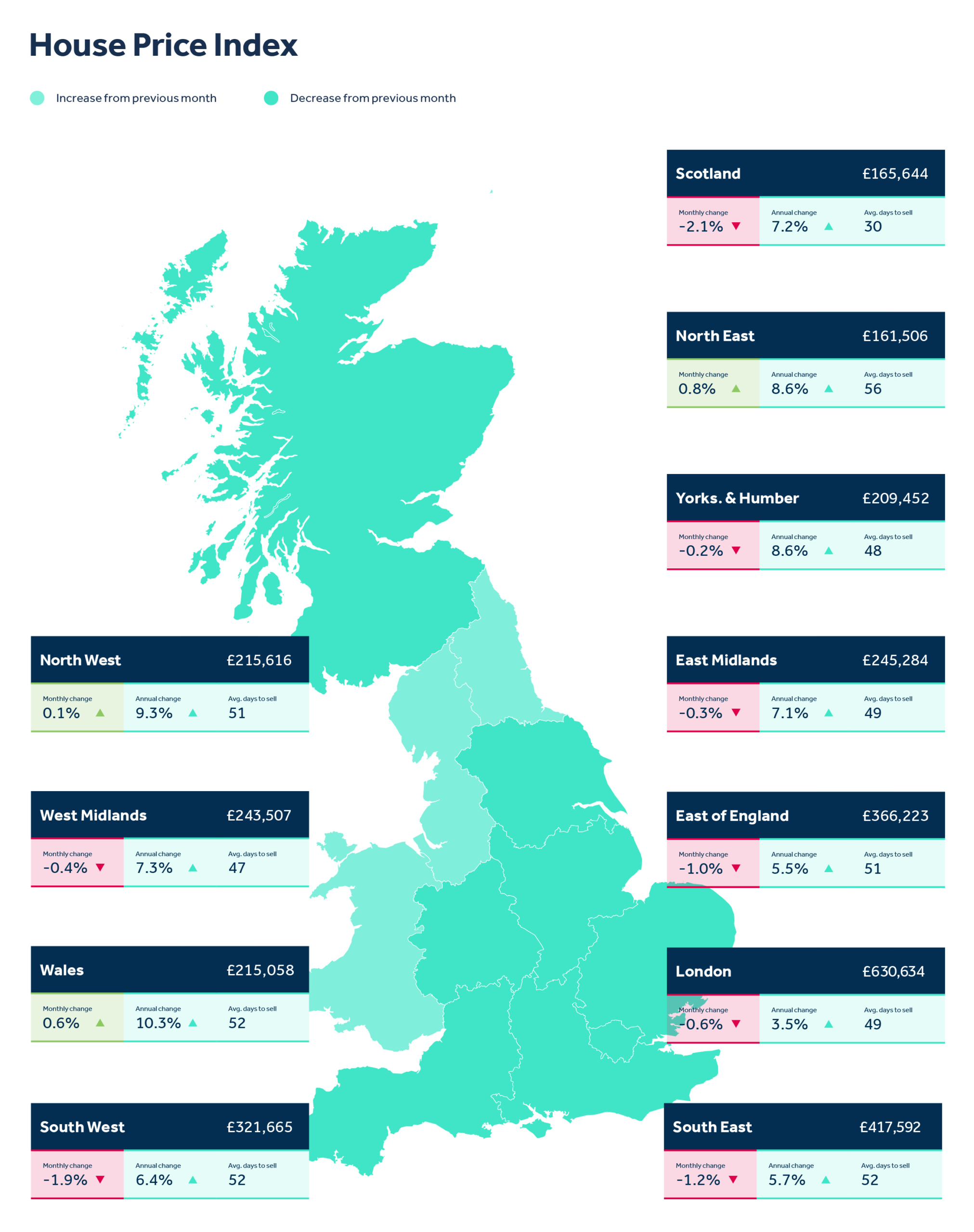
What are the headline figures?
- Average price of property coming to market dips by 0.5% (-£1,505) from last month
- The number of sellers coming to market last month was up 35% on the same time last year
- National sales agreed are up 50% on October last year, and we estimate there’s 650,000 sales going through the buying and selling process, 67% more than at the same time in 2019
- There’s been a 106% uplift in sales agreed and a drop of 23 days in time to secure a buyer in £400,000-£500,000 band
- Buyers who were temporarily uncertain in run-up to the new lockdown in England have jumped back into action, with the first six days of the second lockdown seeing demand up by 49% on this time last year, as the housing market remains open
What do the experts say?
Our resident property data expert Tim Bannister explained that sellers are much more likely to find a buyer if their first asking price is realistic, rather than setting the bar too high to begin with and having to reduce the asking price at a later date.
He said: “Given the ongoing mini-boom, prices might have been expected to rise again this month, but instead we have a slight dip which could be a result of some new sellers pricing more realistically to have a better chance of agreeing a sale in time to benefit from the stamp duty savings on their onward purchase.
“We know from a recent Rightmove study that sellers are twice as likely to sell if they agree a sale based on the first price at which their property goes on the market, something that’s even more important now as we move towards the end of March and the end of the stamp duty holiday.
“If your initial asking price is too high then you’re less likely to get an offer even after you’ve cut your price back to a more realistic level. Our revised prediction of a 7% annual increase in prices in 2020 looks to be on track, since the annual rate has jumped to 6.3% with a month to go.”
What are estate agents seeing?
Bruce King, Director of Cheffins in Saffron Walden, said: “Sellers are taking a realistic view on pricing in the current market. By competitively pricing their homes they’re looking to entice buyers and agree a deal ahead of the stamp duty deadline, whilst also being able to benefit from stamp duty savings on their onward purchase.
“Transaction levels have gone through the roof in comparison to the past couple of years due to the monumental backlog of people looking to move. Political uncertainty, Brexit and the first lockdown period caused many who were considering moving to sit on the fence, however the announcement of the stamp duty holiday was the trigger for many of these to bite the bullet and get on with moving house.
“This, coupled with the change in lifestyle which has been caused by the coronavirus outbreak, has created a pressure cooker in the market which has resulted in activity which couldn’t have been foreseen around a year ago. The market in the £400,000 – £500,000 bracket is certainly the most busy, mainly made up of second-steppers and upsizers.
“First-time buyers are continuing to struggle, as the level of deposit needed has increased and this, combined with a lack of job security for many, has meant that mortgage agreements have been harder to come by as banks change their lending criteria. Demand has remained strong in lockdown 2.0. Mid-November usually brings with it the pre-Christmas slowdown in the market; however, this doesn’t appear to be the case this year as buyers still look to get a sale over the line before the stamp duty deadline.”
Andy Shepherd, CEO of Dexters, added: “London remains a huge draw for investment and city living, and we currently have over 100,000 people registered looking for a new home or investment property, up 25% compared with this time last year.
“The recent reductions in stamp duty have coincided with a busy property market and they are motivational to buyers. However a stamp duty holiday isn’t the main reason for people buying property in the capital.
“Sellers and buyers will most likely share the extra tax burden when it returns next year and although the amounts are not insignificant, we don’t expect them to impact on the market greatly in 2021, arriving as they will in the spring which is the start of the busiest time of the year for moving home. Additionally the potential roll out of a vaccine in the new year could see a greater number of overseas buyers, increasing demand in prime central London especially.”
If you are considering selling or letting your property in Ashtead, Leatherhead, Fetcham, Epsom, Bookham or the surrounding areas, call V&H Homes on 01372 221 678

Newly released data from Halifax has revealed that during October, average house prices across the UK topped £250k for the first time ever following the strongest growth in over four years.
Halifax data shows that on a monthly basis, house prices in October saw a 0.3% rise against September and between August and October, saw a 4.0% rise against the preceding three months. Driven by the mini-boom, research shows that house prices in October were 7.5% higher than in the same month a year earlier – the strongest growth since June 2016.
Russell Galley, Managing Director, Halifax, comments: “The average UK house price now tops a quarter of a million pounds (£250,547) for the first time in history, as annual house price inflation rose to 7.5% in October, its highest rate since mid-2016. Underlying the pace of recent price growth in the market is the 5.3% gain over the past four months, the strongest since 2006. However, month-on-month price growth slowed considerably, down to just 0.3% compared to 1.5% in September.
“Overall we saw a broad continuation of recent trends with the market still predominantly being driven by home-mover demand for larger houses. Since March flat prices are up by 2.0% compared to a 6.0% increase for a typical detached property. In cash terms that equates to a £2,883 increase for flats compared to a £27,371 rise for detached houses.
“This level of price inflation is underpinned by unusually high levels of demand, with latest industry figures showing home-buyer mortgage approvals at their highest level since 2007, as transaction levels continue to be supercharged by pent-up demand as a result of the spring/summer lockdown, as well as the Chancellor’s waiver on stamp duty for properties up to £500,000.
“While Government support measures have undoubtedly helped to delay the expected downturn in the housing market, they will not continue indefinitely and, as we move through autumn and into winter, the macroeconomic landscape in the UK remains highly uncertain. Though the renewed lockdown is set to be less restrictive than earlier this year, it bears out that the country’s struggle with COVID-19 is far from over. With a number of clear headwinds facing the housing market, we expect to see greater downward pressure on house prices as we move into 2021.”
Anna Clare Harper, CEO of asset manager SPI Capital and author of Strategic Property Investing, says: “According to Halifax, house prices were 7.5% higher than in the same month a year earlier. On the face of it, this feels like positive news amidst much that is negative – economically, politically, and socially – at least for property owners. It’s not as simple as this, and this pace of growth is not forecast to continue at the same level.
“Right now, prices are being buoyed up by the temporary Stamp Duty reduction, the release of pent-up demand and supply, and the desire to improve surroundings following lockdown. For example, growth in detached properties was 6%, due to many families understandably seeking more space. Another important factor is that in times of uncertainty, there is a ‘flight to safety’: many people prefer to invest in tangible assets like property.
“The truth is, the housing market is not one market. If you’re thinking about buying a property in this fast-changing environment, one of the best things you can do is to detach from the emotional dimension, so that you are able to analyse whether you are getting a good price and ‘value for money’.”
If you are considering selling or letting your property in Ashtead, Leatherhead, Fetcham, Epsom, Bookham or the surrounding areas, call V&H Homes on 01372 221 678